


The Government Adjusts the Phased Halal Certification Obligation, Taking into Account Ecosystem and Stakeholder Readiness
The Government Adjusts the Phased Halal Certification Obligation, Taking into Account Ecosystem and Stakeholder Readiness
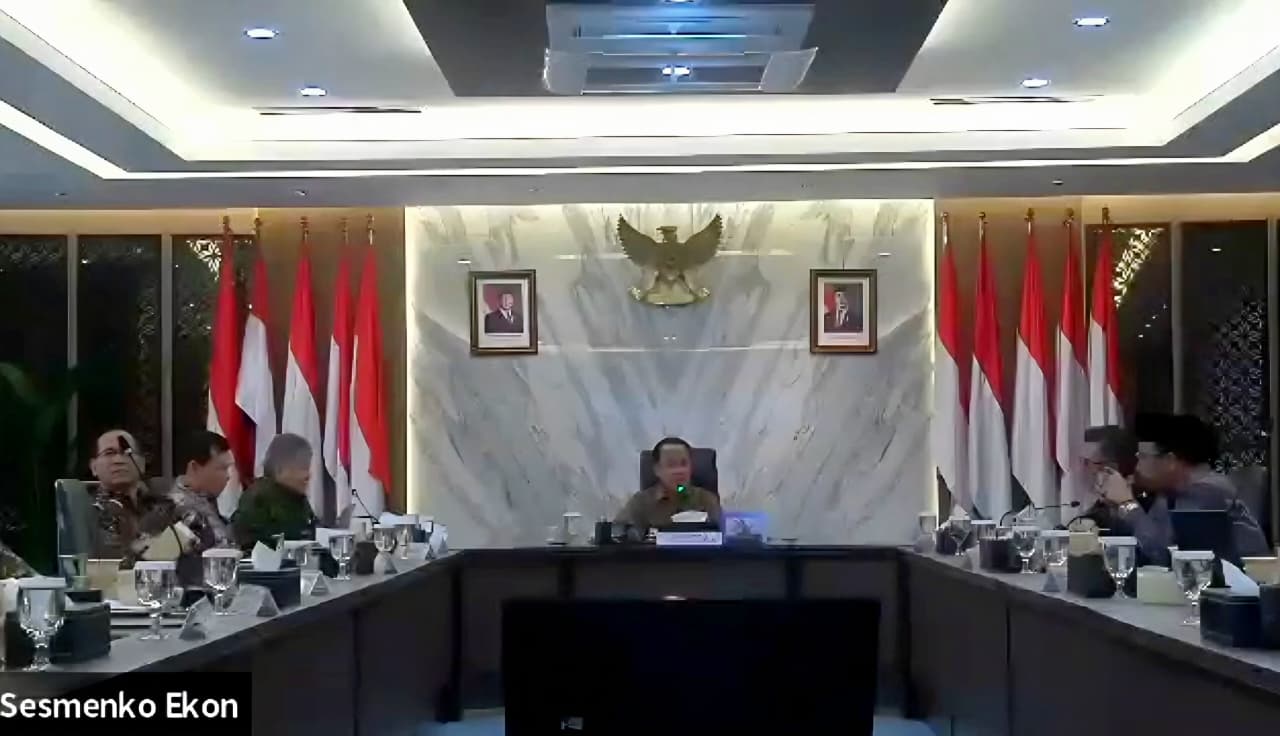
The Coordinating Ministry for Economic Affairs is conducting public awareness campaigns on the policy regarding mandatory halal certification to ministries/agencies, the Halal Product Guarantee Agency (BPJPH), business and industry associations, and relevant stakeholders. This outreach is part of the government’s efforts to ensure the effective implementation of the mandatory halal certification while still ensuring the readiness of the national halal ecosystem.
The government understands that implementing the halal certification requirement is broad and involves millions of businesses and various industrial sectors. This obligation is based on Law No. 33 of 2014 concerning Halal Product Assurance, as amended by Law No. 6 of 2023, with implementing provisions, among others, stipulated in Government Regulation No. 42 of 2024 concerning the Implementation of Halal Product Assurance.
According to Government Regulation Number 42 of 2024, a number of halal certification obligations are scheduled to come into effect on October 18, 2026. However, based on evaluation results and input from business and industry associations, the Government deems it necessary to adjust the phasing period to provide adequate space for strengthening the ecosystem and the readiness of all parties involved.
“Taking into account the readiness of the halal ecosystem, the Government has extended the implementation of the mandatory halal certification through Government Regulation concerning Amendments to Government Regulation Number 42 of 2024,” explained Secretary of the Coordinating Ministry for Economic Affairs Susiwijono Moegiarso in the Socialization of Policies Related to the Obligation of Halal Certification which was held online on Friday (16/10).
The adjustments include changes to Article 160, namely the obligation to have halal certification for service products for food, beverages, and slaughtered products, except for slaughtering services, starting from October 18, 2028. For micro and small business actors, the phase-out of the obligation to have halal certification for food, beverage products, slaughtered products, and slaughtering services has been extended until October 17, 2028.
Meanwhile, the adjustments also include changes to Article 160 paragraph (3), namely the obligation to have halal certification for food products, drinks, slaughtered products and slaughtering services originating from abroad starting from October 18, 2028, taking into account the completion of cooperation on mutual recognition of halal certificates.
Adjustments were also made to a number of product groups that previously had a phase-in period until 2026 as regulated in Article 161 (letters a, d, e, f, and g), namely for natural medicines, quasi-medicines, health supplements, cosmetics, chemical products, genetically engineered products, and a number of categories of consumer goods, the phase-in period was adjusted to until October 17, 2028.
As for other categories, the phasing period still follows the schedule set out in Government Regulation Number 42 of 2024, including over-the-counter drugs and limited over-the-counter drugs until October 17, 2029, as well as hard drugs that are excluded from psychotropics until October 17, 2034.
In addition, the Government will make adjustments to the implementing regulations of Government Regulation Number 42 of 2024 in accordance with the amendments to the Government Regulation and revoke BPJPH Regulation Number 4 of 2026 concerning Ensuring the Conformity of Foreign Halal Products Entering Indonesian Territory.
The government remains committed to Halal Product Guarantee and ensures its implementation is effective and aligned with the ecosystem’s readiness. These adjustments are expected to safeguard consumer protection, provide certainty and room for adjustment for businesses, maintain smooth trade, and strengthen the competitiveness of Indonesia’s halal industry.
The policy socialization was attended offline by representatives from the Coordinating Ministry for Economic Affairs, the Ministry of State Secretariat, and the BPJPH, as well as online by representatives from various business and industry associations.
Also present at the event were the Principal Secretary of the Halal Product Guarantee Agency (BPJPH) and his staff, the Deputy for Economic Affairs at the Ministry of State Secretariat, the Deputy for Energy and Mineral Resources Coordination, and the Acting Deputy for Industry, Manpower, and Tourism Coordination. (d5/dft/tam)
Share This Post


Partner Events: