
Finding directions for developing Halal tourism.
With its long coastline, high-end resorts, unique cultural heritage, and abundant local specialties, Khanh Hoa has many advantages to attract Muslim tourists. However, the lack of direct flights, accommodation, Halal-certified restaurants, and personnel knowledgeable about Islamic culture are obstacles preventing Khanh Hoa from becoming a preferred destination for Muslim tourists.
Not living up to its potential
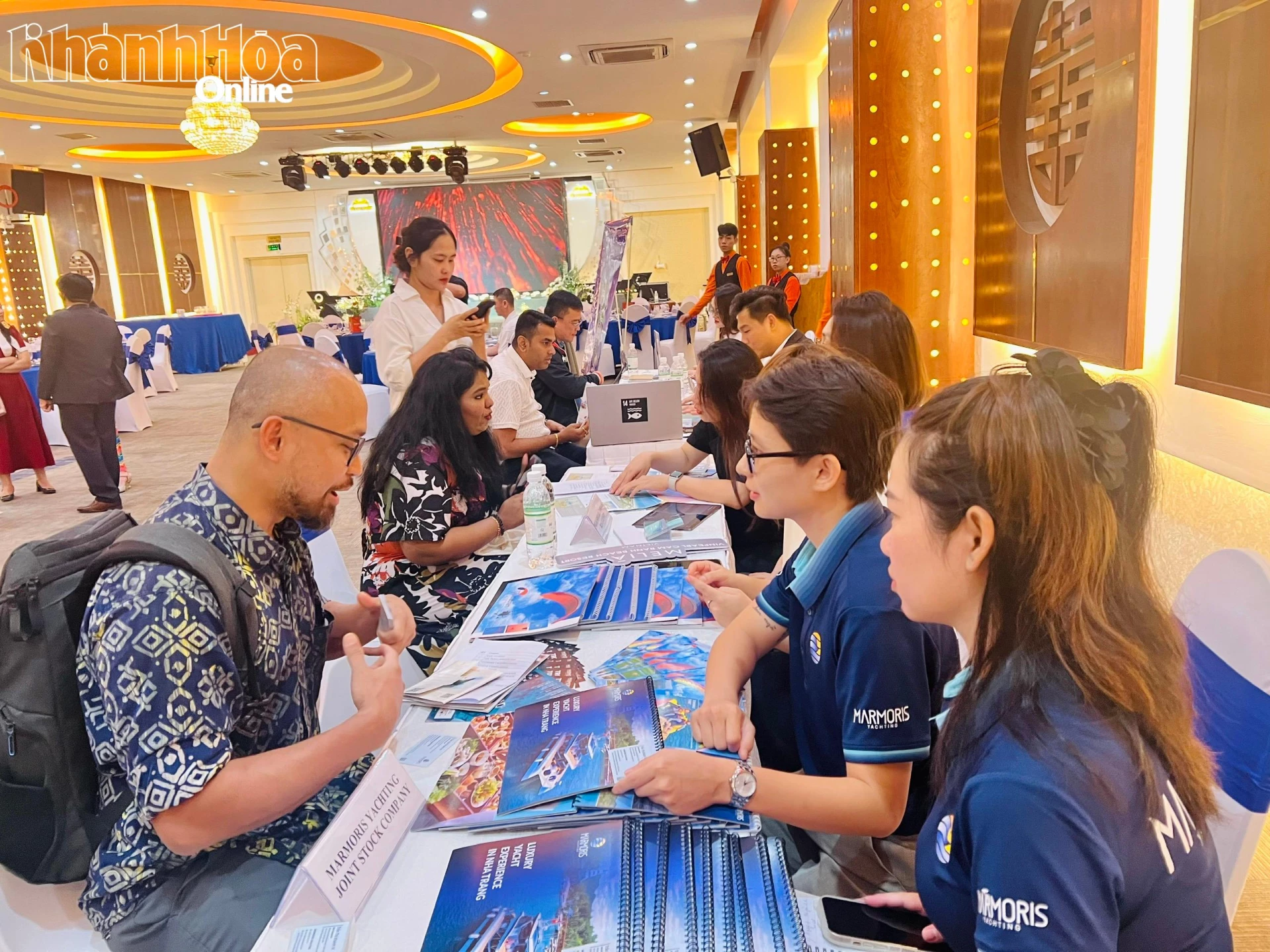
Within the framework of the Vietnam Halal Tourism Conference 2026 held in Nha Trang, many experts assessed that Khanh Hoa has many advantages for developing Halal tourism. From famous bays such as Nha Trang, Cam Ranh, Van Phong, and Vinh Hy to high-end, secluded resorts in the Bai Dai area or on islands suitable for the needs of large family vacations for tourists from the Middle East, Malaysia , and Indonesia. In addition, the Cham cultural heritage with its ancient temple complexes, Bau Truc pottery village, and traditional festivals provides material for building cultural exploration products. Seafood and products such as bird’s nest, sea grapes, aloe vera, and tropical fruits can be easily standardized to serve as culinary offerings and gifts for Muslim tourists.
However, attracting tourists from the Halal market faces challenges due to the lack of direct flight networks. Currently, Cam Ranh International Airport only has direct flights to Malaysia and some Central Asian countries such as Uzbekistan and Kazakhstan. The lack of direct flights from Indonesia , India, and Middle Eastern countries (UAE, Saudi Arabia, Qatar, etc.) forces tourists to make multiple layovers, reducing the destination’s competitiveness.
Furthermore, Halal-certified services are still lacking in the province. Halal tourism requires adherence to strict regulations from slaughtering, preservation, and processing in separate kitchens to the arrangement of prayer spaces (Musalla). Currently, very few hotels and restaurants in Khanh Hoa have official Halal certification. Many businesses are hesitant about the investment and maintenance costs of certification when the number of customers is not yet large enough, while a local supply chain of certified ingredients has not yet been established.
Furthermore, there is a shortage of tour guides and service staff who are knowledgeable about the local culture, customs, and specific languages (Arabic, Malay). Nha Trang ‘s nighttime economic activities still heavily rely on bars and lively entertainment – not well-suited to the more relaxed shopping, dining, and cultural experiences preferred by Muslim tourists.
Expanding the Halal tourist market
According to Ms. Thai Thi Le Hang, Director of the Department of Culture, Sports and Tourism, the plan for developing the international tourism market to Khanh Hoa in the period 2026-2030 has taken into account expanding the Halal tourism market. For tourists from the Middle East, the province prioritizes products and services that meet Halal standards, combined with high-end resorts, health care, shopping, and family tourism.
The Provincial People’s Committee has just issued a plan for the development of Halal tourism in the province. Specifically, in the period 2026-2027, the province will review the capacity of accommodation establishments, restaurants, tourist attractions, and travel agencies; in the period 2028-2030, it aims to have 3 hotels meeting standards for being friendly to Muslim guests, 5 restaurants meeting Halal culinary standards, and 3 model tour routes. Each year, the province will organize one training course on culture, beliefs, and service skills for Muslim tourists. Priority products include beach and island resorts, health care, MICE (Meetings, Incentives, Conferences, and Exhibitions), combined with experiences in traditional craft villages such as swiftlet farming, agarwood production, and Cham and Raglai culture.
According to Mr. Doan Hai Quan, Director of Vietravel’s Khanh Hoa branch, the province needs to create a Halal-friendly destination based on five core elements: suitable food, prayer spaces, transparent information, culturally respectful services, and safe, private experiences. On that basis, it aims to become the Halal tourism center of the Central and Central Highlands regions.
Experts believe that instead of scattered investment, the province should focus on “targeted standardization.” Initially, it is necessary to support a number of large resorts in Cam Ranh and Nha Trang to achieve Muslim-friendly standards according to TCVN 14230:2024, and then gradually upgrade to international Halal standards. Promoting Halal certification for OCOP products such as bird’s nest, sea grapes, goat meat, and lamb will bring double value to both tourism and trade.
Regarding connectivity, the province plans to expand flight routes to Malaysia, Indonesia, India, and the Middle East, and establish a Halal Tourism Alliance to connect travel agencies, airlines, and hotels from these countries. Promotion efforts will utilize digital transformation, integrate Halal tourism content into the province’s promotional programs, and implement QR code scanning points at Cam Ranh Airport, combining multi-platform and multi-language communication to spread the image of Khanh Hoa as a safe, friendly, and culturally rich destination.
In early 2027, Khanh Hoa province is expected to organize a workshop on Halal tourism development to find solutions to overcome current bottlenecks. With standardized services and the opening of new flight routes, Khanh Hoa can fully leverage Halal tourism as a new growth driver.
In recent years, Halal tourism has emerged as a rapidly growing segment of the global tousim industry. According to the 2023 Global Islamic Tourism Index (GMTI) published by Mastercard and CrescentRating, the number of Muslim tourists is projected to reach 230 million by 2028, contributing over US$225 billion to the global economy. Vietnam has many favorable conditions to attract this group of tourists thanks to its stable political environment, abundant tourism resources, and strategic location connecting Southeast Asia with South Asia and the Middle East. In 2025, Vietnam welcome over 21 million international tourists, of which over 600,000 were Muslim tourists, accounting for nearly 3%. This shows that there is still significant potential for attracting Muslim tourists to Vietnam.
Source: https://www.vietnam.vn/en/tim-huong-phat-trien-du-lich-halal