

Halal Cosmetics Market Trends & Summary
By Renub Research for Vocal.media
A Rapidly Rising Global Beauty Movement Driven by Ethics, Faith & Clean Ingredients
The global beauty landscape is undergoing a transformational shift as consumers increasingly demand products that embody transparency, ethical sourcing, and ingredient purity. One of the fastest-rising segments benefiting from this shift is the Halal Cosmetics Market, which continues to gain momentum not only among Muslim consumers but also among a broader audience seeking cleaner, safer, and ethically aligned beauty solutions.
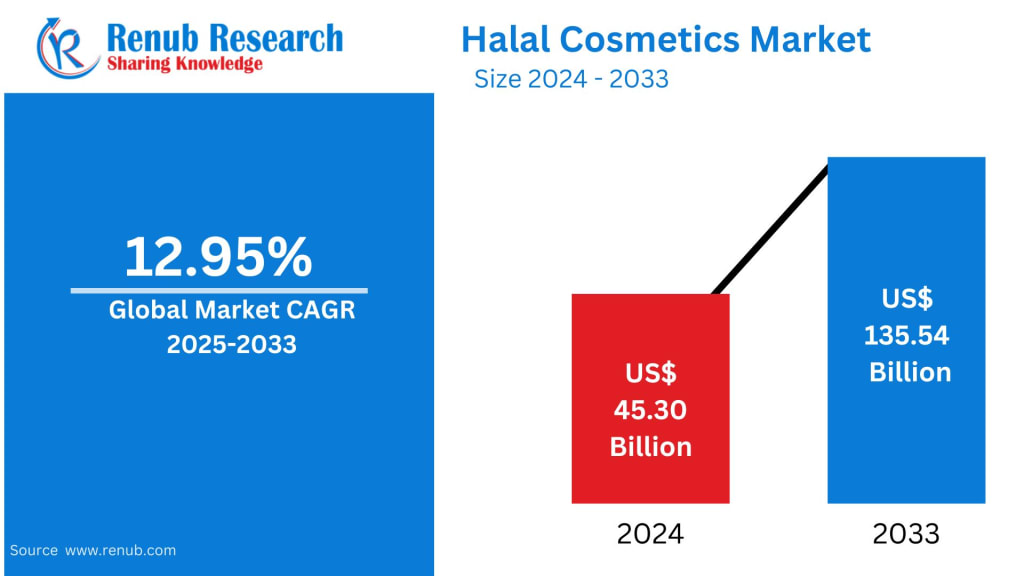
According to Renub Research, the Halal Cosmetics Market is expected to surge from USD 45.30 billion in 2024 to USD 135.54 billion by 2033, growing at a strong CAGR of 12.95% from 2025 to 2033. This rapid expansion is being fueled by rising global Muslim populations, increasing awareness about Halal certification standards, and the booming influence of digital retail channels.
What Makes Cosmetics “Halal”?
Halal cosmetics adhere strictly to Sharia law, ensuring products are free from prohibited (haram) components such as:
- Alcohol
- Pig-derived ingredients
- Blood components
- Insects, reptiles, and amphibian extracts
They must also be ethically produced, cruelty-free, and free from contamination during manufacturing. Standards such as MS 2200-1:2008 (for cosmetics and personal care) and MS 2200-2:2013 (animal bone, skin, hair) guide these formulations, ensuring purity and compliance.
As more consumers—Muslims and non-Muslims alike—turn toward safer, ethical products boasting natural, eco-friendly formulations, demand for Halal-certified beauty items has intensified.
Why the Halal Cosmetics Market Is Growing So Rapidly?
1. Rising Ethical Consumerism
Consumers today want to know exactly what goes into their beauty products. This growing consciousness around ingredient safety and sustainability directly aligns with Halal principles.
Halal cosmetics check several boxes for modern buyers:
- Clean, natural ingredients
- Cruelty-free processes
- Ethical and sustainable sourcing
- Reduced chemical exposure
This overlap has significantly broadened the Halal beauty audience, drawing in health-conscious consumers and those committed to cruelty-free and vegan lifestyles.
2. Strong Certification Standards Build Trust
A key growth catalyst for the Halal cosmetics sector is the establishment of rigorous certification guidelines across various regions. Clear standardization provides:
- Confidence in product authenticity
- Protection against contamination
- Transparency across supply chains
This strengthened regulatory framework has enabled greater international trade, helping Halal beauty brands expand into new markets where clean and ethical beauty is gaining traction.
3. A Growing Global Muslim Population
Demographic shifts are playing a major role. Muslim populations are rising worldwide, and with it, the demand for beauty products that align with religious values.
For these consumers, Halal beauty is not optional—it is essential. Rising disposable incomes among Muslim-majority regions are also helping support premium beauty purchases, further accelerating market growth.
Key Challenges for the Halal Cosmetics Industry
Despite strong demand, the market faces notable obstacles:
1. Competition from Conventional Clean Beauty Brands
Mainstream cosmetic brands have increasingly adopted:
- Vegan formulations
- Natural ingredients
- Cruelty-free practices
- Eco-friendly manufacturing
This overlap blurs the competitive line between Halal and non-Halal clean beauty products. Halal brands must work harder to differentiate themselves based on religious compliance, purity, and authenticity.
2. Lack of Standardized Certification Globally
Different countries follow different Halal certification processes. This inconsistency leads to:
- Confusion for consumers
- Barriers in global trade
- Mislabeling risks
For the Halal cosmetics market to reach its full global potential, regional certifications must gradually move toward a uniform international standard.
Market Insights from Renub Research
Personal Care Products Lead the Market
Personal care items—including lotions, cleansers, soaps, and hygiene products—hold the largest market share. Growing adoption among both Muslim and non-Muslim women supports this segment’s dominance.
Skincare Remains the Top Revenue Generator
Skincare is the fastest-growing and highest-earning segment within Halal beauty. Consumers increasingly prefer Halal-certified skincare products for their natural, ethical, and contaminant-free formulas.
Hypermarkets & Supermarkets Dominate Distribution
- These retail formats offer:
- High product visibility
- Wide consumer reach
- Greater trust due to shelf presence
Major global chains are expanding their Halal beauty offerings, strengthening overall market penetration.
Regional Market Overviews:
United States
The U.S. Halal cosmetics market is expanding steadily due to:
- A rising Muslim population
- Growing interest in cruelty-free and natural beauty
- Significant availability across supermarkets and online retailers
Challenges include inconsistency in certification and competition from mainstream ethical brands. Still, soaring consumer awareness promises continued growth.
Germany
Germany is witnessing robust demand for ethically produced beauty items. Halal-certified cosmetics align with:
- Sustainable ingredient sourcing
- Clean beauty values
- Cruelty-free standards
While inconsistent certification frameworks remain a barrier, consumer adoption continues to strengthen.
Indonesia
Indonesia—home to the world’s largest Muslim population—is a global powerhouse for Halal beauty. Market drivers include:
- Strong cultural adherence to Halal standards
- Surge in middle-class income
- Booming demand for natural, chemical-free cosmetics
Although certification complexities and increased competition pose hurdles, both domestic and international brands are rapidly entering this flourishing market.
Qatar
Qatar demonstrates high demand for Halal beauty products due to:
- A predominantly Muslim population
- Growing preference for natural, ethical, and religiously permissible cosmetics
- Rising online and premium retail availability
- Even with certification challenges, consumer interest continues to rise sharply.
Market Segmentation (Renub Research)
By Product Type
- Color Cosmetics
- Personal Care Products
- Fragrances
- By Application
- Hair
- Skin
- Face
- Beauty Care
By Distribution Channel
- Hypermarkets & Supermarkets
- Online Stores
- Convenience Stores
- Specialty Stores
- Others
By Country (24 Markets)
North America, Europe, Asia, MEA, and Rest of the World—including major markets such as the U.S., Germany, Indonesia, India, Saudi Arabia, UAE, Qatar, China, Malaysia, Turkey, and Pakistan.
Key Companies Profiled
- Estee Lauder
- L’Oréal
- S&J International Enterprises
- Kao Corporation
- Clara International Beauty Group
- INIKA
- AMARA COSMETICS
- WARDAH COSMETICS
- SAMPURE MINERALS
- HALAL COSMETICS COMPANY
Each company is covered through three perspectives: Overview, Recent Developments, and Revenue Analysis.
Final Thoughts
The Halal Cosmetics Market is far more than a niche segment—it is becoming a global force shaping the future of ethical and clean beauty. Driven by rising religious compliance, a booming Muslim population, and increasing awareness of sustainable and toxin-free formulations, this market is poised for strong growth through 2033.
As certification processes mature and consumer awareness expands, Halal cosmetics are expected to continue gaining acceptance across mainstream beauty audiences worldwide. With major global players entering the space and local brands gaining strong traction, the Halal beauty movement is set to redefine the global beauty industry in the coming decade.
Source: https://vocal.media/styled/halal-cosmetics-market-trends-and-summary
Share This Post

Partner Events: