
MALAYSIA is committed to strengthening its long-standing ties with Arab nations by deepening economic cooperation in sectors that align with shared strategic interests.
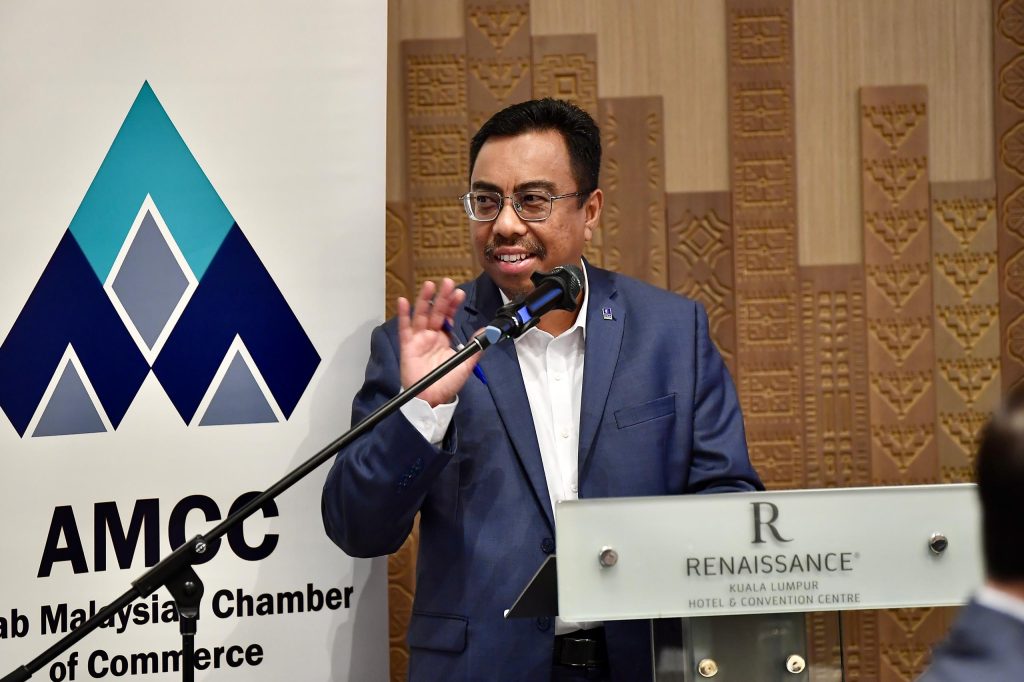
Trade and Investment (MITI) Minister Tengku Datuk Seri Zafrul Aziz in a keynote speech, delivered by MITI Secretary General Hairil Yahri Yaacob, highlighted the importance of building on centuries of cultural, religious, and trade connections between Malaysia and the Arab world.
“Malaysia is ready to partner with Arab countries in strengthening the global halal value chain, from certification to supply and logistics,” he said during the Arab Malaysian Chamber of Commerce’s (AMCC) 15th Annual General Meeting on Wednesday.
Key areas identified include the energy transition, digital economy, and food security.
He stated that Malaysia is well positioned to contribute expertise in halal certification and logistics, collaborate in renewable energy and carbon markets, partner in fintech and digital infrastructure, as well as explore agricultural ventures to enhance food resilience.
Tengku Zafrul also stressed Malaysia’s strengths as an investment destination, pointing to its strategic ASEAN location, skilled multilingual workforce, comprehensive infrastructure, and strong legal protections.
He assured Arab partners that government agencies such as Malaysia External Trade Development Corporation (Matrade), Malaysian Investment Development Authority (Mida), and Invest Malaysia are ready to facilitate business needs and sustain long-term cooperation.
“While trade and investment numbers matter, it is the trust between our people that forms the bedrock of long-term partnerships,” he said.
Tengku Zafrul acknowledged that the relationship should extend beyond commerce to include education, culture, and technology.
Over the years, the Middle East has become one of Malaysia’s key trading partners, importing products ranging from Proton cars to commodities while also engaging in halal industry ventures.
MITI has pledged to continue its engagement with Arab counterparts to further strengthen these trade relations.
Tengku Zafrul added that Malaysia is also stepping up trade diplomacy with the wider Arab region through formal agreements.
Hairil pointed out that Malaysia had recently concluded a Comprehensive Economic Partnership Agreement (CEPA) with the United Arab Emirates, which is expected to enter into force once domestic legal processes are completed.
“At the moment, we have concluded CEPA negotiations with UAE and InshAllah, it will enter into force soon, once both countries have completed the domestic procedures,” he said after delivering the keynote speech.
He also confirmed that Malaysia and the Gulf Cooperation Council (GCC) are preparing to launch Free Trade Agreement (FTA) negotiations, with the first full round expected this December.
“The chief negotiators for both Malaysia and GCC have met physically a couple of months ago, and we will have a full-fledged negotiation in December in one of the GCC countries,” he said.